The Modern
Silk Road
A journey through time exploring the world's greatest trade network and its modern transformation.
The Original Silk Road
When commerce connected civilizations across mountains, deserts, and seas.
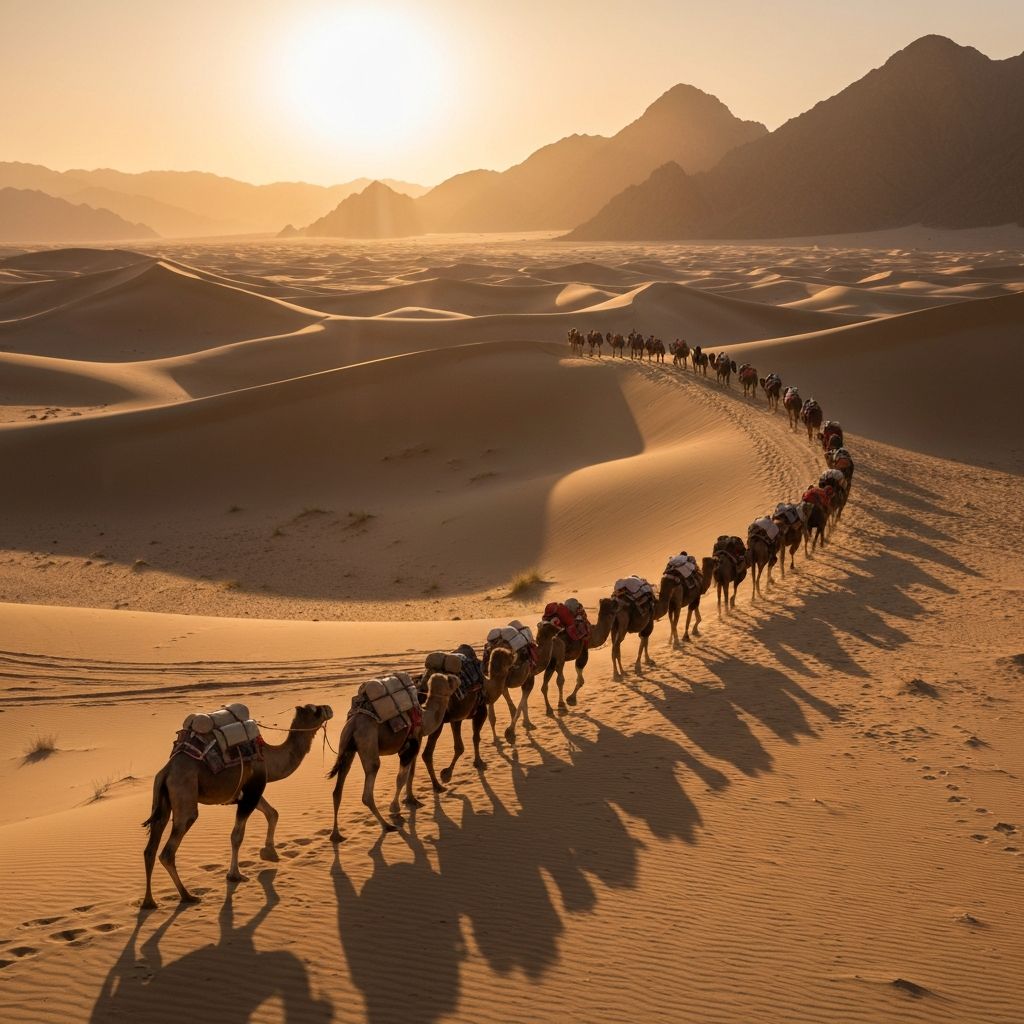
Ancient Trade Networks
Caravans traversed 6,000 miles across deserts and mountains, carrying silk, spices, and ideas between civilizations.
From Han Dynasty China to the Roman Empire, trade knew no borders.
Continuous trade from 130 BCE through the Age of Exploration.
What Flowed Along the Routes
Trade flowed because it benefited everyone along the way. Merchants didn't need government permission; they needed reliable partners and fair exchange. This organic system changed the world.
A Closer Look
Each node tells a story of transformation
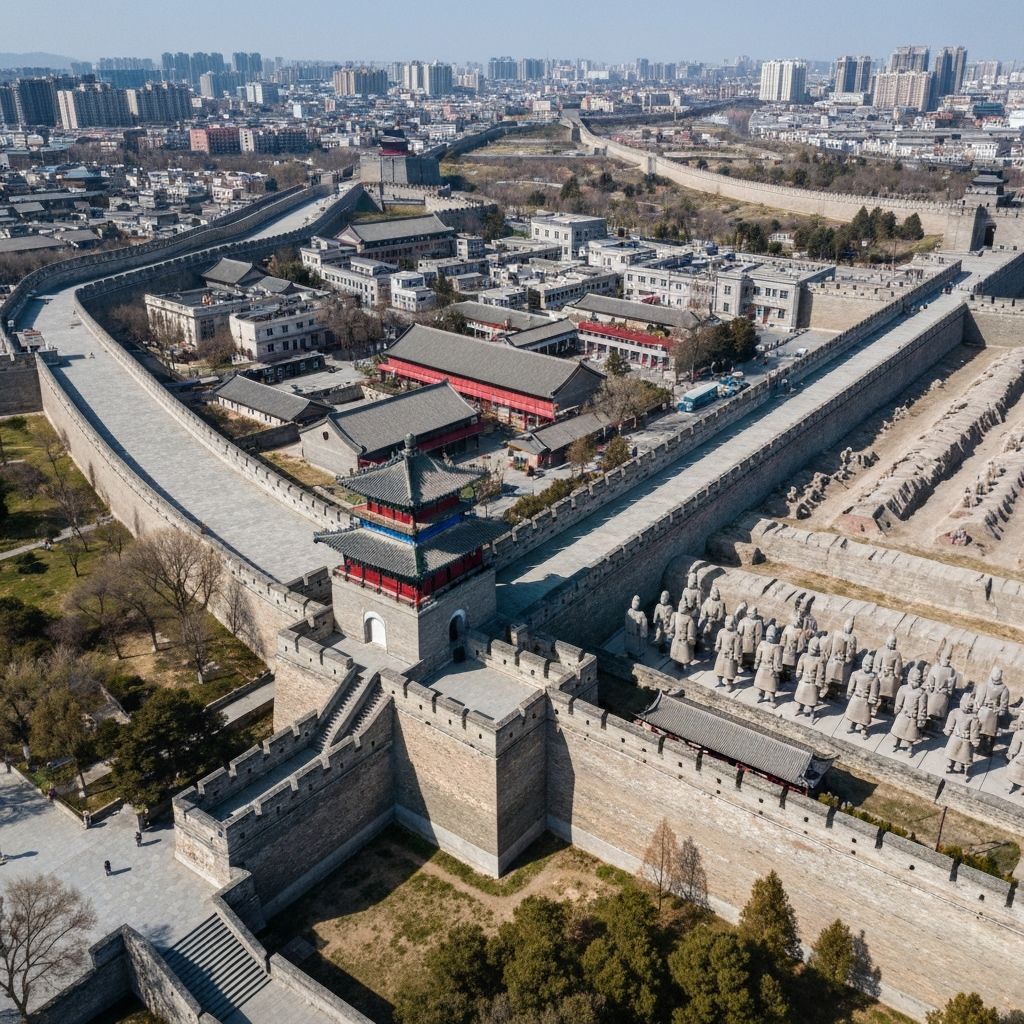
Xi'an
Eastern Terminus & Imperial Capital
Ancient Chang'an was the eastern end of the overland Silk Road and imperial capital. It served as a major hub for Persian, Sogdian, and Central Asian merchants, and was a centre for silk, paper, metalwork, religion, and astronomy. The city hosted thriving multi-ethnic communities within its walls.
The Contradictions
Fundamental tensions between then and now
Polycentric Networks
Historical networks were polycentric, with multiple centers of power and trade flowing organically between diverse civilizations. No single state controlled the routes.
State-Centered
BRI is strongly centered on one state, with infrastructure investments radiating outward from a single national interest and strategic vision.
Hybrid Internationalism
International in scale, nationalist in purpose
The BRI builds major transcontinental infrastructure and reduces trade frictions, creating new urban corridors linking distant economies.
Yet it remains tightly controlled by states—especially China—and is tied to sovereignty, security, identity, and great-power rivalry.
The result is a hybrid: international in scale, nationalist in purpose. 'Openness' depends on political alignment and security priorities.
Each city along the route demonstrates this tension differently—from state-led development in Xi'an to contested sovereignty in Gwadar.
The modern Silk Road reveals that internationalism and nationalism are not opposites, but deeply intertwined forces shaping our connected world.
Ready to Explore?
Dive into the interactive map and discover how ancient trade routes transformed into modern corridors of power.